When to hire an email deliverability consultant (and when not to)
 Emmanuel KwartengJune 13, 2026
Your open rates dropped 35% in six weeks. Gmail is clipping your messages. You Googled "email deliverability consultant" and you're now staring at agency pages quoting $5,000 retainers. Before you sign anything, here's what most of those pages won't tell you: the majority of deliverability problems trace back to list hygiene, not infrastructure — and a free verification run surfaces that in 20 minutes.
This guide walks you through what a deliverability consultant actually does, when you genuinely need one, what it should cost, and — critically — what you should fix yourself first. Some of that prep work will solve the problem entirely. The rest will cut your consulting bill in half.
The single most useful thing you'll take from this: verify your list before any audit begins. A consultant who sees a clean list focuses on infrastructure. A consultant who has to explain bounce categories to you charges for that time.
What an email deliverability consultant actually does
The title sounds like email marketing, but the work is closer to network engineering. A deliverability consultant is one part DNS technician, one part ISP relationship manager, and one part data analyst. They are not writing your subject lines or redesigning your templates.
The core deliverables are specific: an audit report, authentication fixes (SPF, DKIM, DMARC), blacklist removal requests, and — for serious situations — direct escalations to ISP postmaster teams. That last one is why you hire a specialist instead of just reading a blog post. A consultant with a working relationship at Gmail's postmaster desk can get a domain delisted in days. The same request through public channels takes weeks, if it works at all.
What they can't fix: bad content that triggers spam filters, purchased lists with no engagement history, or a product that generates complaints because the audience never asked to hear from you. If your complaint rate is high because your emails are irrelevant, no amount of DKIM rotation will save you. Infrastructure problems have infrastructure solutions. Audience problems don't.
On duration: a one-time project engagement makes sense for a specific incident — a blacklisting, an IP migration, an ESP switch. A monthly retainer makes sense when you're sending at volume (100K+ per month), running parallel transactional and marketing streams, or operating in a regulated industry where deliverability is a compliance issue. For most senders under that threshold, a project engagement and a solid set of monitoring tools is enough.
Signs you need one (and signs you don't)
Some signals are hard. If your open rate dropped 30% or more in 60 days with no creative change, that's a reputation event — not a subject line problem. A Gmail or Yahoo bulk-sender rejection (the kind that bounces mail at the gateway with a 550 error) is hard. An ISP-level block on your sending IP — not just a DNSBL listing, but a policy block — is hard. These warrant a consultant.
Soft signals are worth watching but don't automatically justify a $5,000 engagement. Inbox placement below 85% on seed tests, DMARC aggregate reports showing 10%+ authentication failures, or a bounce rate creeping above 2% — these are serious enough to act on, but often fixable without outside help if you know where to look.
Here's when you should not hire yet:
- You're a first-time sender and haven't configured SPF, DKIM, or DMARC. Do that first — it's free and takes an afternoon.
- Your list is under 5,000 addresses. At that size, a manual cleanup and authentication setup resolves almost everything.
- You haven't run your list through a verifier. List problems masquerade as deliverability problems constantly — invalid addresses and spamtraps tank your sender reputation in ways that look identical to an IP blacklisting until you dig in.
The self-triage checklist before spending $3K–$15K on a retainer: SPF published and under 10 DNS lookups? DKIM key at 2048 bits? DMARC at least at p=none with aggregate reporting turned on? List verified in the last 90 days? Engagement suppression applied to zero-opens in 12 months? One-click unsubscribe header in place? If all six are yes and inbox placement is still broken — then you need a consultant.
Verify before you consult
Most consultants will tell you to clean your list anyway. Do it first and you arrive at the engagement with a cleaner dataset, a shorter audit, and a lower invoice. Run your active list through a verifier and remove Invalid, Disposable, and Spamtrap results before any audit begins. Our guide on why verify emails covers exactly what each failure category costs you.
What a deliverability audit covers
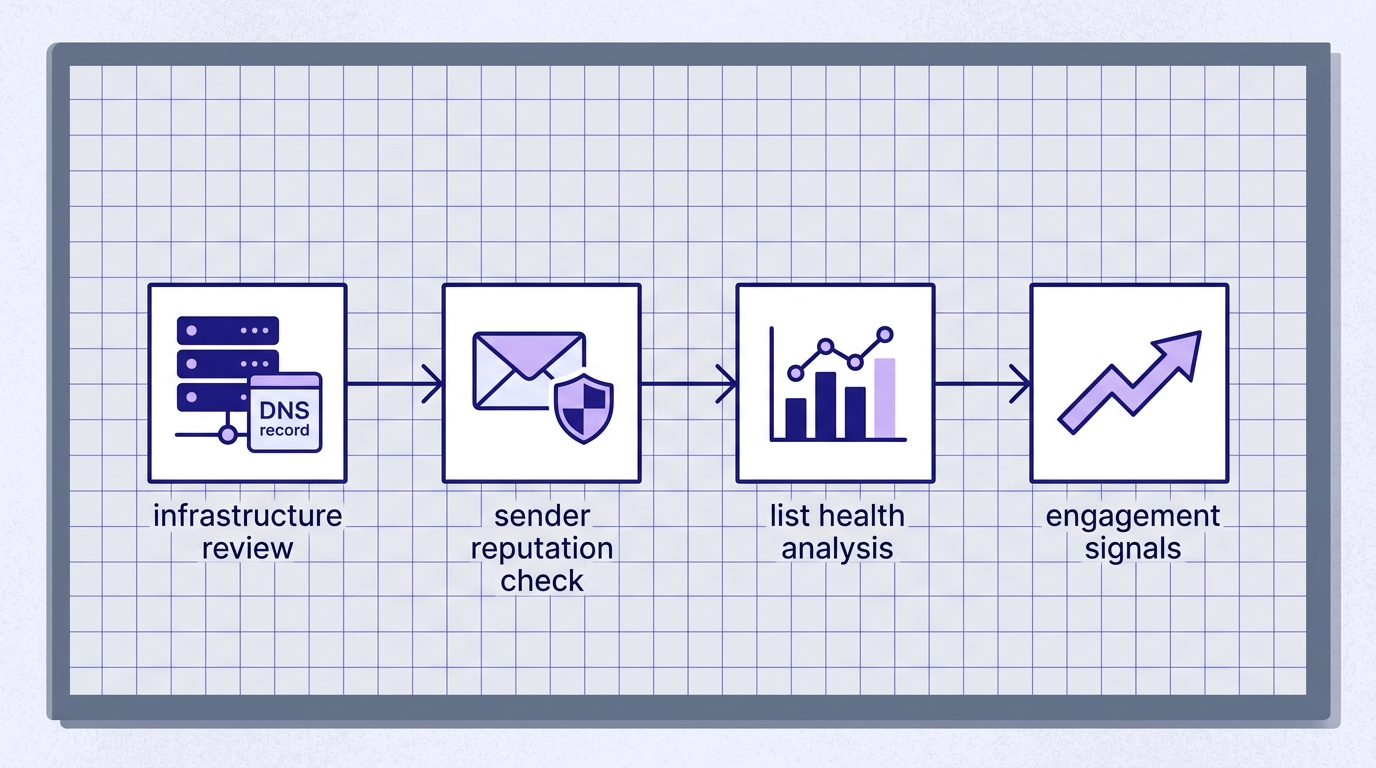
A legitimate audit runs in four phases. If a consultant skips any of them — especially list health — that's a red flag.
Infrastructure review
SPF lookup count (must stay under 10 per RFC 7208), DKIM key length (2048-bit minimum), DMARC policy and aggregate reporting, BIMI eligibility. This is the configuration layer — it either passes or it doesn't.
Sender reputation check
IP and domain blacklist status, Google Postmaster Tools domain and IP reputation scores, Microsoft SNDS data. This tells you whether the damage is already done and where it's concentrated.
List health analysis
Bounce category breakdown (hard vs. soft), role address ratio (info@, admin@, support@), disposable address ratio, catch-all volume. This phase is the one most agency pages skip in their write-ups — which is exactly why list problems go undiagnosed.
Engagement signals
Open rate by ISP, complaint rate by ISP, unsubscribe rate trends over time. Gmail and Yahoo weight engagement heavily in their filtering algorithms. Low engagement from a segment of your list pulls down reputation for the entire send.
A thorough audit takes 5–10 business days. The output should be a written report with specific findings in each phase, a prioritized remediation list, and benchmarks so you can measure improvement. If you receive a two-page PDF with generic recommendations, ask for a refund.
How to find a legitimate consultant
Three routes: specialist agencies, independent freelancers, and ESP-bundled services. Each has a different tradeoff.
Specialist agencies — firms like Email Industries (Unspam), InboxArmy, and Mailmonitor — bring team depth, documented methodologies, and sometimes genuine ISP relationships. They're the right choice for complex programs: multi-IP infrastructure, parallel transactional and marketing streams, active blacklist situations. Cost is higher and engagement structures are more formal.
Independent freelancers on Upwork can be excellent value if you vet them properly. Look for ISP postmaster experience specifically (not just "email marketing"), DMARC reporting fluency (can they read raw XML aggregate reports?), and a documented seed-list methodology. Rates run $75–$200/hour for experienced specialists. The risk is availability and institutional knowledge — a solo consultant who gets sick mid-engagement is a problem.
ESP-bundled services — the deliverability add-on your ESP upsells — are often fine for basic monitoring but rarely include ISP escalation capabilities. They're incentivized to keep you on the platform, not to give you an honest assessment of whether the platform is part of your problem.
Red flags regardless of route: guaranteed inbox placement promises (no one can guarantee this — even M3AAWG's published best practices don't frame it as a guarantee), no seed-list methodology, vague claims about "proprietary ISP relationships" without specifics, and any consultant who doesn't ask for DMARC aggregate data before quoting.
What to ask during the discovery call
A good consultant asks for your data before they quote. If someone gives you a price after a 15-minute call with no access to your DMARC reports or Postmaster Tools account, they're quoting a package, not your situation.
Five questions worth asking every candidate:
- What's your diagnostic process? The right answer involves requesting DMARC XML aggregate reports and Google Postmaster Tools read access before any work begins.
- Which ISPs have you escalated to directly? Gmail, Yahoo, Outlook, and Apple Mail cover over 85% of consumer inboxes. A consultant who has only ever filed public abuse reports hasn't done the hard part.
- How do you measure success? Inbox placement rate via seed list is the correct answer. Open rate alone is not — Apple Mail Privacy Protection has made open rates unreliable as a deliverability proxy.
- What's your stance on list hygiene? Any consultant who doesn't mention verification as a prerequisite is skipping a step. Walk away from anyone who wants to fix your IP reputation without addressing your list.
- Can I see a sample audit report or anonymized case study? The format and depth of their previous work tells you more than any sales call.
Pricing: what deliverability consulting actually costs
The range is wide because the scope is wide. Here's how the market actually breaks down:
| Engagement type | Typical range | Best for |
|---|---|---|
| One-time audit | $500–$3,000 | Diagnosing a specific decline or pre-migration check |
| Project-based remediation | $2,000–$10,000 | Blacklist removal, IP migration, ESP migration |
| Monthly retainer | $1,500–$8,000/month | Ongoing monitoring + ISP escalation for high-volume senders |
| Freelancer (hourly) | $75–$200/hour | Targeted help on a specific issue with a vetted specialist |
The ROI math can work quickly at scale. A 10-point inbox placement improvement on a list of 100,000 addresses sending weekly at a $0.05 CPM is worth roughly $260,000 per year in recovered reach — emails that were landing in spam now landing in the inbox. At that math, a $3,000 audit pays back in the first week.
What drives cost up: complex multi-IP infrastructure, transactional and marketing programs running in parallel (different warming curves, different complaint thresholds), and active blacklist situations that require postmaster escalation rather than just record fixes.
What you should fix before the consultant arrives
Consultants charge for their time. Time spent explaining that your SPF record has 14 lookups or that you've never configured DMARC is expensive time. Arrive with the basics done.
Authentication baseline. SPF published and under 10 DNS lookups (the hard limit in RFC 7208 — exceeding it causes receivers to treat your record as a permerror). DKIM at 2048-bit minimum — 1024-bit keys are now considered weak and some receivers reject them outright. DMARC at least at p=none with an rua= address so aggregate reports are flowing. You can check your DMARC policy in under a minute.
List hygiene. Run your active list through a verifier and suppress Invalid, Disposable, and Spamtrap results before the audit. These three categories are the ones that actively damage your sender reputation — sending to them isn't neutral, it's negative. Our bulk verification walkthrough covers the process end to end.
Engagement pruning. Suppress addresses with zero opens in 12 months. A consultant doesn't need to spend billable time telling you that a 2019 email address with no engagement is dragging down your domain reputation. You already know. Do it before the call.
Unsubscribe compliance. One-click List-Unsubscribe has been required for Gmail bulk senders since February 2024 per Google's sender guidelines. If your ESP doesn't insert this header automatically, you need to add it. A consultant who finds a compliance gap here will flag it — but they'll also charge you for the finding.
Check an email before your audit begins
Paste any address to see its 11-stage verification result — Invalid, Disposable, and Spamtrap results are the ones to clear first.
Powered by Valid Email Checker — full SMTP handshake, disposable + role detection, no card required.
When to use tools instead of (or before) a consultant
Self-serve tooling catches roughly 70% of common deliverability issues before you spend a dollar on consulting. The question is whether your issue is in that 70%.
A DMARC record checker surfaces authentication failures without requiring you to parse raw XML. An IP blacklist checker tells you within seconds whether your sending IP is listed on a major DNSBL — which is a configuration or reputation problem, not necessarily a reason to hire. An email header analyzer diagnoses routing issues and spam filter scoring from a single sent message.
For a broader picture before making any decision, an email deliverability checker pulls together inbox placement signals in one view.
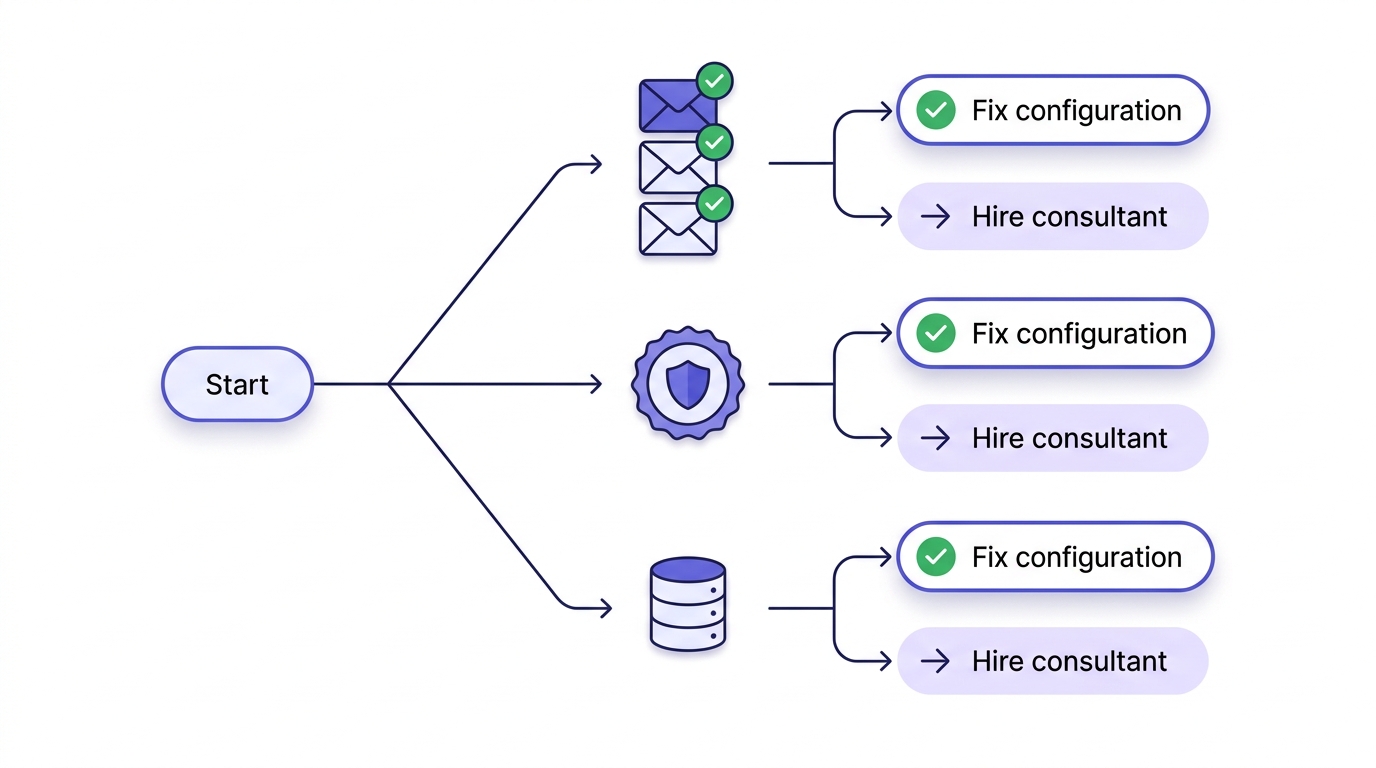
The decision tree is straightforward: if tools surface a fixable configuration issue, fix it. If inbox placement is still broken after authentication is clean and your list is verified, then hire. You'll arrive at that engagement with documented evidence of what you've already tried — which makes the consultant's diagnostic work faster and your invoice smaller.
For context on what the verification step actually surfaces, the post on cold email list verification goes deep on the technical side. And if you're evaluating what a verifier actually returns before spending on one, what you actually get from a free email verifier is worth reading — particularly the section on Unknown results, which most verifiers charge for and Valid Email Checker refunds automatically.
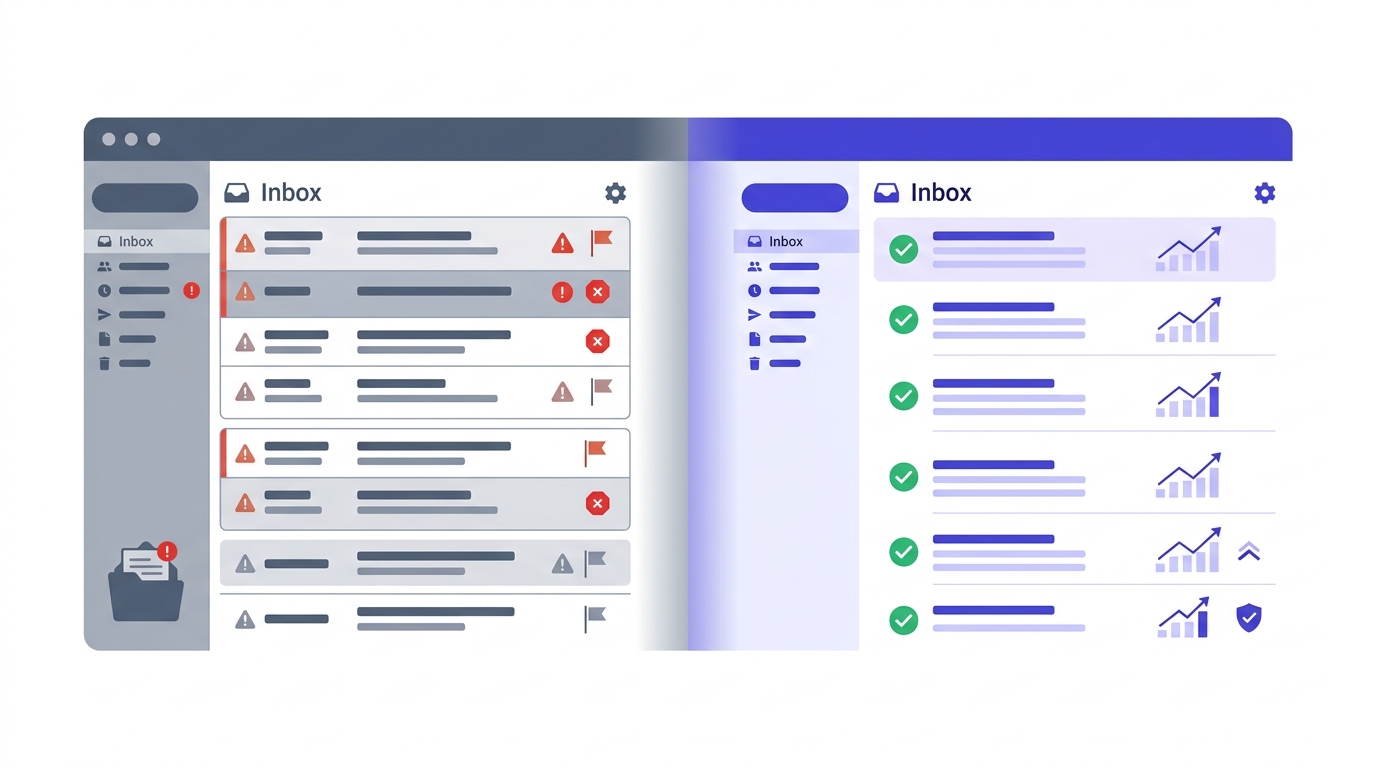
Free tool · no signup
Check your inbox placement before you call anyone
See where your sending domain stands — takes 60 seconds and costs nothing.
The fastest path through a deliverability problem is the same whether you hire a consultant or not: start with authentication, then list hygiene, then tooling, then a human. Valid Email Checker handles the list hygiene step — run your active list, pull out the Invalid, Disposable, and Spamtrap results, and arrive at any audit with the cleaner dataset a consultant actually needs.
Frequently asked questions
How much does an email deliverability consultant cost?
What does an email deliverability consultant actually do?
When should I hire an email deliverability consultant vs. fixing it myself?
What questions should I ask an email deliverability consultant before hiring?
How do I find a legitimate email deliverability consultant?
What should a deliverability audit include?
Can an email deliverability consultant guarantee inbox placement?
How long does it take to fix email deliverability problems?
Try Valid Email Checker free
Verify any email in under a second
Get 150 free verifications. No credit card. Auto-refund on every Unknown result — the only verifier we know that does this.
- 150 free credits when you sign up
- Auto-refund every Unknown verification (we're the only ones that do)
- 11-stage flow catches what 1-step checkers miss
- Drop-in integrations for Mailchimp, HubSpot, SendGrid, 14 more
Written by
Emmanuel KwartengEmmanuel is the founder of Valid Email Checker. He spends most of his time in bounce logs, verification data, and the gap between what email vendors promise and what actually happens when you hit send. He started the company because too much deliverability advice is guesswork dressed up as best practice, and he writes here to cut through it with the numbers behind each claim.