Cold email news: what changed in 2024–2026
 Emmanuel KwartengJune 15, 2026
Search "cold email news" right now and you get a mess: half the results are beginner guides dressed up as news, the other half are Reddit threads from 2022 that nobody updated. Meanwhile, Google quietly changed its sender requirements in February 2024, Microsoft overhauled Outlook's filtering in early 2026, and bounce rate thresholds that were industry-standard two years ago will now get your domain suspended.
This post is the briefing that search result doesn't exist yet. By the end of it you'll know exactly what changed in the regulatory, deliverability, and tactical layers of cold email between 2024 and mid-2026 — and what to do about each change before it costs you a domain.
The single thread running through all of it: list verification went from a nice-to-have to the first thing serious senders do before any campaign touches a sending domain.
What 'cold email news' actually means (and why the SERP is a mess)
The keyword conflates two very different searches. Some people want a newsletter about cold email tactics — subject line advice, follow-up cadence, copy frameworks. Others want to track the regulatory and deliverability developments that are actively changing whether cold email works at all. Those are not the same question.
This post serves the second group. Three categories of cold email news actually matter for practitioners in 2026:
- Regulatory — CAN-SPAM amendments, GDPR enforcement actions, and the new EU AI Act provisions that touch automated outreach at scale.
- Technical/deliverability — inbox provider policy changes, new spam filter architectures, and infrastructure requirements that determine whether your email lands or disappears.
- Tactical — what's working and what's burning, drawn from high-volume practitioners rather than tool vendors with a product to sell.
Practitioners who ignore the first two categories get blindsided. The Google/Yahoo February 2024 sender requirements weren't announced with a countdown timer — senders who missed them discovered the change when reply rates dropped and Postmaster Tools showed a spike in spam classifications. Regulatory and deliverability news isn't interesting until it's expensive.
The 2024–2026 regulatory timeline every cold sender needs to know
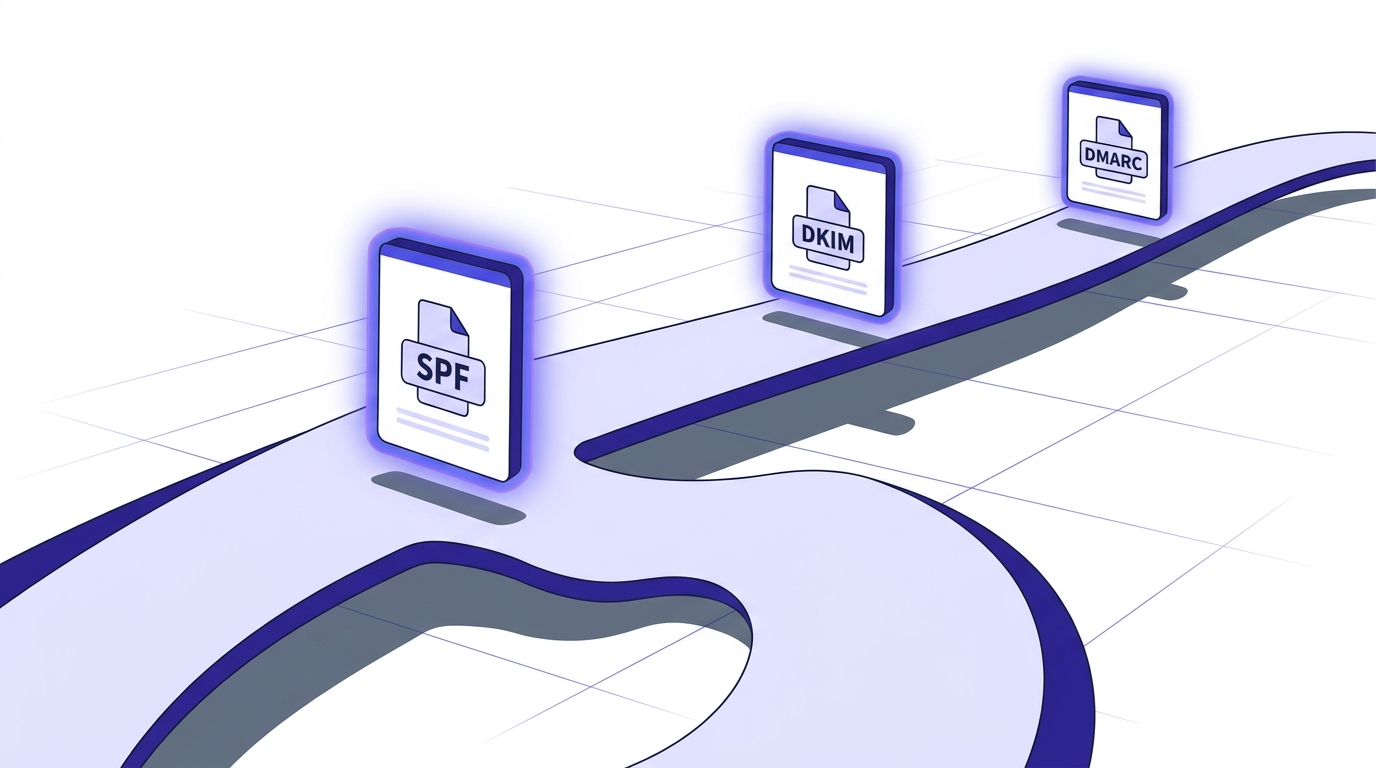
February 2024 is the line in the sand. Google and Yahoo published bulk sender requirements that took effect that month, covering three areas:
- DMARC enforcement: domains sending more than 5,000 emails per day to Gmail addresses must have a DMARC policy published.
p=nonequalifies — the requirement is presence, not enforcement level — but it must exist. - One-click unsubscribe: bulk senders must support RFC 8058 List-Unsubscribe-Post headers and honor unsubscribes within two days.
- 0.3% spam rate ceiling: Gmail's Postmaster Tools spam rate must stay below 0.3%. Above 0.1% triggers warnings. Above 0.3% triggers delivery throttling.
The important nuance for cold senders: these requirements don't mandate opt-in. Cold email to Gmail addresses remains legal under CAN-SPAM as long as you meet the authentication and complaint-rate thresholds. What changed is that authentication is now enforced, not just recommended. If you're sending cold email without SPF, DKIM, and a DMARC record, Gmail will reject or heavily filter your mail regardless of how good your copy is. You can check your DMARC record in about 30 seconds to confirm your policy is live.
The FTC reviewed CAN-SPAM in 2024 and made one substantive change: the definition of "transactional or relationship messages" was clarified to prevent senders from misclassifying promotional cold outreach as transactional to avoid opt-out requirements. The core structure of CAN-SPAM — commercial email is permitted with an opt-out mechanism — did not change.
The EU AI Act adds a newer wrinkle. Automated outreach systems that use AI to generate personalized copy at scale may qualify as "AI systems" under the Act's classification framework. The "high-risk" category doesn't apply to most cold email tools, but providers targeting EU businesses with AI-generated, hyper-personalized sequences are watching enforcement guidance closely. The practical implication for 2026: if you're using an AI writing layer on top of your sequences and you're targeting EU contacts, document your process. The compliance exposure isn't acute yet, but it's real.
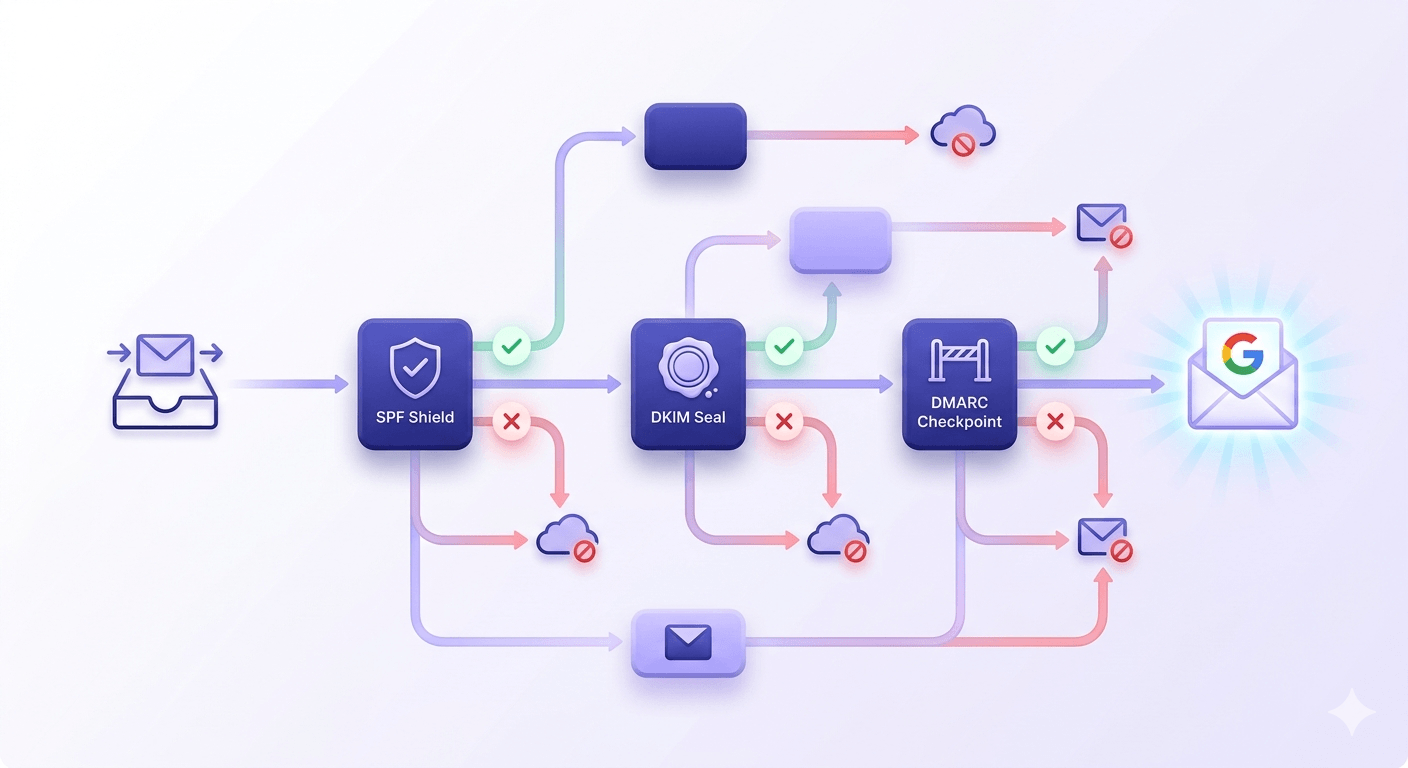
The practical takeaway: authentication is table stakes. You can debate copy, subject lines, and send times endlessly — none of it matters if your SPF record is misconfigured or your DMARC record is missing. Start there. Everything else is downstream.
Deliverability shifts that hit cold senders hardest in 2025–2026
Google got most of the 2024 headlines, but Microsoft's Outlook filtering changes in Q1 2026 have been rougher for cold senders in practice. Outlook now applies stricter domain-age checks, weighs the ratio of new-to-known recipients more aggressively, and has tightened its bulk-mail heuristics in ways that disproportionately affect cold outreach (which, by definition, goes to people who haven't interacted with your domain before). Several high-volume senders in r/coldemail reported Outlook inbox rates dropping 15–25 percentage points on the same sequences that were performing well in Q4 2025.
Google's RETVec spam filter, deployed in late 2023 and refined through 2025, changed how Gmail processes email text. Previous spam filters were keyword-based — you could work around them by rewording phrases. RETVec uses character-level embeddings that are resistant to character substitution tricks (replacing "o" with "0", adding invisible characters, etc.). The same shift is happening on-device with Apple Mail's ML-based filtering. Keyword manipulation no longer moves the needle. The signal that matters is behavioral: does the recipient open, reply, or mark as spam? That behavioral data is what inbox providers use to score your domain's reputation.
Domain aging has always mattered. In 2026 it matters more. Infrastructure providers — the platforms that sell sending infrastructure to agencies — now enforce a minimum warmup period before allowing volume sends. The informal consensus from practitioners is 2–4 weeks of warmup before sending to cold lists, with a hard ceiling of 30 emails per inbox per day during the warmup phase. Freshly registered domains that skip this step burn within days. The domains that survive are the ones that look, to inbox providers, like they've been sending normal human email for a while before the first campaign fires.
The bounce rate thresholds that ESPs and infrastructure providers use to flag accounts have also tightened. The old rule of thumb was 5% hard bounce before you'd see account warnings. That number is now closer to 2% across most platforms. This isn't theoretical — senders who push unverified lists at volume are hitting suspension thresholds faster than they were two years ago. The email deliverability guide for 2026 covers the enforcement mechanics in more detail.
The 'cold email is dead' debate — what the data actually says
The "cold email is dead" take resurfaces every 18 months. The argument has a real foundation: the average professional receives 120+ emails per day, delete behavior is ruthless, and the median reply rate across most industries is low enough to make the math look terrible at first glance.
Here's what the data actually says. Instantly's 2026 benchmark — drawn from campaigns run through their platform — puts the average cold email reply rate at 3.43% industry-wide. Top-performing agencies consistently hit 5–10%. Those numbers are not dead. They're lower than they were in 2019, but they're not zero, and the senders achieving 5–10% are not doing anything exotic. They're doing the fundamentals correctly.
The real split isn't "cold email works vs. doesn't work." It's: cold email is dead for lazy senders and alive for senders who treat it as a technical discipline. The practitioners who report failure are typically sending unverified lists, using template sequences everyone has seen, and ignoring authentication. The practitioners who report 7% reply rates are verifying lists before every send, running personalized first lines, and monitoring Postmaster Tools weekly.
One specific tactical shift worth noting: "quick question" subject lines — a staple of cold email copy for years — now actively damage open rates on some platforms. The pattern became so associated with spam that inbox providers trained on it as a negative signal, and recipients learned to delete it on sight. The Hacker News reaction to a widely-shared cold email handbook in 2025 surfaced this clearly: the comments were full of practitioners saying the "quick question" format was the first thing they'd stripped from their sequences after watching open rates fall. Novelty has a short half-life in cold email.
Newsletter vs. cold email: the tactical convergence happening right now
There's a real argument circulating — Bill Rice and others have made it — that cold emails formatted to look like newsletters see better engagement because they stand out from the wall of identical template outreach everyone's inbox receives. The logic is sound. If every cold email looks like a CRM sequence, the one that looks like a thoughtful personal email or a curated note wins attention by contrast.
What "looks like a newsletter" means technically is specific: higher word count, more context before the ask, sometimes a content section that delivers genuine value before any pitch. What it doesn't mean is HTML templates, multiple images, and heavy link density. That combination — newsletter aesthetics with cold-email targeting — triggers bulk-mail filters because the technical fingerprint matches marketing email sent to opted-in lists. Inbox providers look at image-to-text ratio, link density, and header structure. A heavily designed email going to people who've never heard of you reads as bulk spam, regardless of how good the copy is.
The practical rule that experienced senders have landed on: borrow the content strategy from newsletters (value-first, sequenced, treating the reader as someone worth educating), but keep the technical profile of a personal email (plain text or minimal HTML, one or two links maximum, no tracking pixel overload). The convergence is in the philosophy, not the format.
Where cold email and newsletter operations genuinely share infrastructure is list hygiene. Newsletter operators have always treated list quality as a core metric because their business model depends on engagement rates. Cold senders are arriving at the same conclusion from a different direction: a dirty list doesn't just waste sends, it actively damages the sending domain that the next campaign depends on.
List verification: the step practitioners are finally treating as non-negotiable
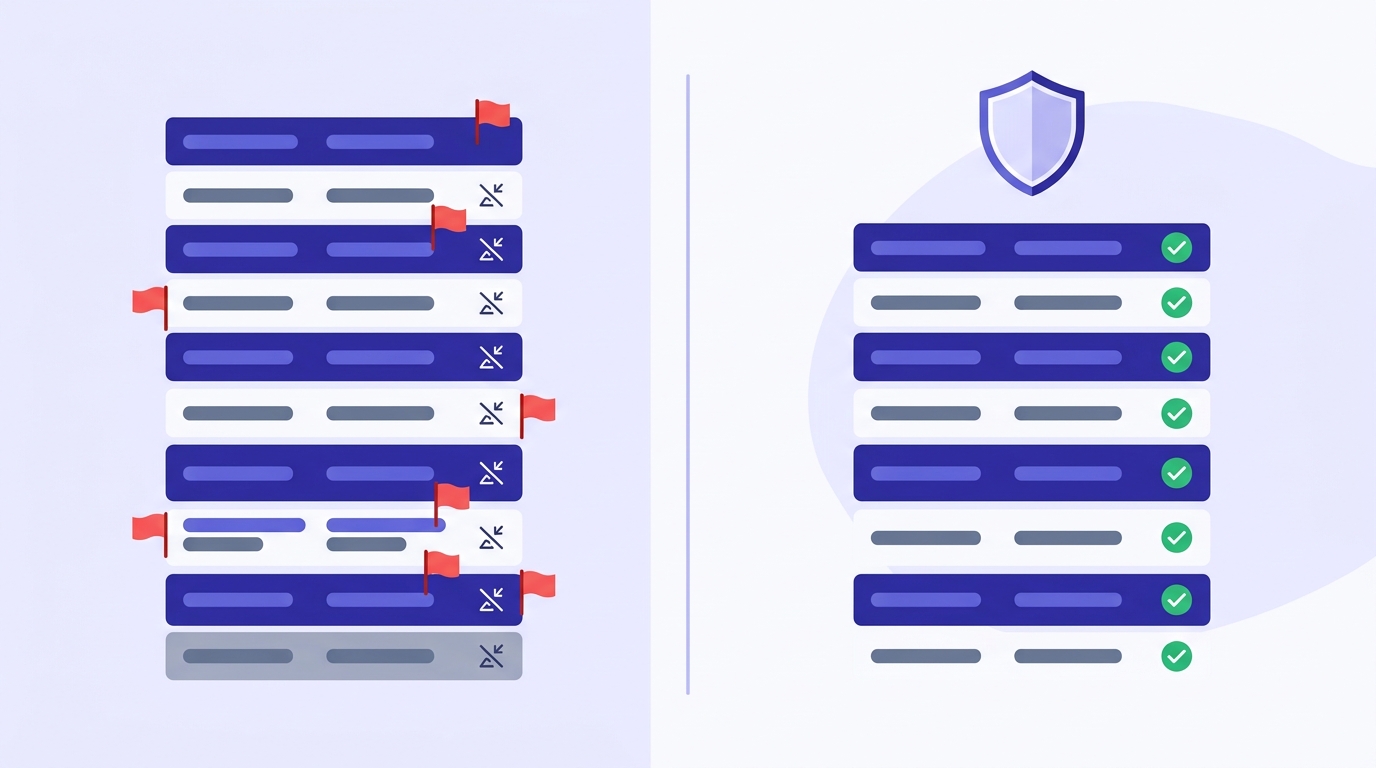
A thread from a $1.5M-revenue cold email sender on r/coldemail put it plainly: "MillionVerifier on every list before it goes into the sender." That kind of statement — from someone with real volume at stake — signals that verification has crossed from "something careful senders do" to "standard operating procedure." The thread had dozens of replies from other high-volume practitioners saying the same thing in different words.
The math is straightforward. A 2–5% hard bounce rate on a fresh sending domain will degrade its reputation within 30 days. Inbox providers see those bounces as evidence that you're either scraping addresses without permission or maintaining a stale, unmanaged list — both of which are correlated with spam behavior. The domain doesn't recover quickly. A burned domain typically takes 90+ days of careful, low-volume sending to rehabilitate, if it recovers at all.
The catch-all problem makes this harder. A catch-all domain is one that accepts all incoming mail regardless of whether the specific mailbox exists — so SMTP verification returns a positive result for anything@thatdomain.com, even for addresses that will hard-bounce when you actually send. Catch-all domains inflate apparent list quality. You verify the list, it comes back clean, and you still see bounces because the verification couldn't probe individual mailboxes. Understanding how catch-all emails work matters when you're reading your verification results — a high catch-all rate in your list is a warning sign, not a clean bill of health.
The current best practice for domain preservation is verifying in batches before scaling. Verify a sample of 200–500 addresses from a new list source, look at the breakdown of statuses, and only scale to 5,000+ if the safe-to-risky ratio justifies it. Sending 5,000 emails from a new domain before you understand the list's quality is how domains die in their first month.
Check a cold email address before it hits your sender
Paste any address to see its full 11-stage verification result — including whether it's catch-all, disposable, or a spamtrap.
Powered by Valid Email Checker — full SMTP handshake, disposable + role detection, no card required.
One specific cost that practitioners often miss: Unknown results. When a verifier can't return a definitive status — because the receiving server is rate-limiting probes, or the domain is configured to be deliberately ambiguous — some verifiers charge you for that result anyway. Those Unknown addresses are exactly the ones most likely to bounce or behave unpredictably. Valid Email Checker auto-refunds every Unknown result — no support ticket, no fine print. The credit posts back automatically. That matters when you're running continuous verification on lists that include a lot of ambiguous domains, because you're not paying to verify addresses that couldn't actually be verified. See the full breakdown of what each status means if you want to understand how to read your results.
Free tool · no signup
Verify a cold email address instantly
11-stage verification. Unknown results refunded automatically.
The technical infrastructure stack cold senders run in 2026
For anyone building or auditing a cold email operation, here's what the current standard stack looks like — drawn from practitioner threads, not vendor marketing.
Dedicated sending domains, aged before first send
Your primary business domain doesn't send cold email. Ever. You register dedicated sending domains (e.g.
getname.com,tryname.io) and age them for a minimum of 2–4 weeks before the first campaign fires. During aging, the domain sends low-volume, human-looking email to warm it up. Freshly registered domains that go straight to cold outreach are flagged by domain-age heuristics within days.Full authentication stack: SPF, DKIM, DMARC
This is the floor, not the ceiling. SPF tells receiving servers which IPs are authorized to send for your domain. DKIM signs each message so receivers can verify it wasn't tampered with. DMARC ties them together and tells inbox providers what to do when checks fail. All three must be configured correctly — you can confirm your SPF is configured correctly and verify your DMARC policy before a single send. The full picture of how these three protocols interact is covered in the email authentication guide. BIMI (Brand Indicators for Message Identification) is the emerging ceiling — it requires a
p=quarantineorp=rejectDMARC policy and a verified logo, and it gives your brand mark in Gmail's sender field. Not required, but increasingly worth the setup for agencies sending at volume.Structured warmup: 2–4 weeks, capped at 30/inbox/day
Infrastructure providers now enforce this ceiling programmatically on new inboxes. The warmup phase gradually increases send volume while the inbox accumulates positive engagement signals (opens, replies, not-spam marks from the warmup network). Automated warmup tools (built into most sending platforms) handle this, but the ceiling is real — trying to skip to 200/day on a week-old inbox will trigger filtering.
Inbox rotation: 3–5 inboxes per client domain
Agencies running cold outreach for clients typically set up multiple inboxes per sending domain and rotate sends across them. This keeps per-inbox volume below the threshold that triggers bulk-mail classification while maintaining campaign throughput. When agencies don't do this — running a single inbox at 200+ sends per day — that inbox burns, and the domain's reputation follows it.
Monitoring: Postmaster Tools, SNDS, and blacklist checks
Google Postmaster Tools gives you domain reputation, spam rate, and authentication pass rates for Gmail. Microsoft SNDS (Smart Network Data Services) is the equivalent for Outlook. Third-party blacklist monitoring catches listings on RBLs (real-time blacklists) before they start affecting deliverability at scale. Running these three together is the standard monitoring dashboard. Run a deliverability check before your next campaign to see where your domain stands across these signals.
Where to follow cold email news in real time
The sources that actually surface useful cold email news — as opposed to recycled tactics — are a short list.
Reddit r/coldemail is the fastest-moving practitioner community. The signal-to-noise ratio is high when you filter by top posts of the week or month. The threads where high-volume senders share what's working — and what just burned a domain — are more candid than anything a tool vendor will publish. Read critically: survivorship bias is real, and the people posting wins are not always the ones whose domains died quietly last month.
Hacker News surfaces contrarian takes and technical deep-dives that practitioner communities miss. The comments on any cold email post there tend to include deliverability engineers, postmaster alumni, and infrastructure people who understand the receiving side of the equation — a perspective that's largely absent from sales-focused communities.
ESP and tool blogs (Instantly, Saleshandy, Lemlist) are vendor-biased but often the first to document deliverability changes that affect their platform. Read them for early signals, verify the claims against primary sources before acting on them.
For deliverability specifically — which is where cold email news that actually matters lives — three sources are worth following directly: Laura Atkins at Word to the Wise, Al Iverson's Spam Resource, and the M3AAWG published documents. M3AAWG is the industry working group that produces the best-practice guidance that inbox providers actually reference. Their publications are dry but authoritative. When Google or Yahoo changes a sender requirement, the underlying reasoning usually traces back to M3AAWG working group discussions.
For policy changes that directly affect your inbox placement: the Gmail Help announcements page and the Google sender guidelines are the primary source. Not a blog post about what Google changed — the actual Google page. Same principle applies to Microsoft's sender support documentation. Primary sources lag slower than the community, but they're accurate.
Free tool · no signup
Test your sending domain's inbox placement
See authentication status, blacklist presence, and deliverability signals in one check.
The practical checklist: what to act on right now
If you've read this far and want to translate it into actions rather than awareness, here's what matters most in order of impact:
- Confirm authentication is complete. SPF, DKIM, and DMARC must all be configured on every sending domain. Check them — don't assume.
- Verify your list before every send. Not once before the campaign. Before every send. Lists go stale. A contact who was valid in January may be invalid in June. The technical foundation for cold email list verification covers the full workflow.
- Watch your Postmaster Tools spam rate. Set up Google Postmaster Tools if you haven't. The 0.1% warning threshold is lower than most senders expect.
- Respect the 30/inbox/day ceiling. More inboxes at lower volume beats fewer inboxes at higher volume, every time.
- Stop using 'quick question' as a subject line. It's trained spam now. Test something that doesn't look like every other cold email in the prospect's inbox.
Cold email in 2026 is a technical discipline with a content layer on top. The senders treating it that way are the ones still getting replies. The senders ignoring the technical layer are the ones writing Reddit posts about why their domain got suspended.
The first place to start is knowing what's in your list. Bounce rate is the metric that warns you something is wrong; verification is the step that prevents the warning from becoming a suspended account. The tool below handles that — and if any addresses come back with Unknown status, those credits are refunded automatically.
Frequently asked questions
Is cold email still legal and effective in 2026?
What did Google and Yahoo's 2024 sender requirements change for cold email?
What bounce rate will get a cold email domain flagged or suspended?
How is cold email different from newsletter email marketing?
Why do 'quick question' subject lines hurt cold email performance now?
How many emails per inbox per day is safe for cold outreach in 2026?
Where can I follow real-time cold email industry news and deliverability updates?
What does a verified cold email list actually cost to maintain?
Try Valid Email Checker free
Verify any email in under a second
Get 150 free verifications. No credit card. Auto-refund on every Unknown result — the only verifier we know that does this.
- 150 free credits when you sign up
- Auto-refund every Unknown verification (we're the only ones that do)
- 11-stage flow catches what 1-step checkers miss
- Drop-in integrations for Mailchimp, HubSpot, SendGrid, 14 more
Written by
Emmanuel KwartengEmmanuel is the founder of Valid Email Checker. He spends most of his time in bounce logs, verification data, and the gap between what email vendors promise and what actually happens when you hit send. He started the company because too much deliverability advice is guesswork dressed up as best practice, and he writes here to cut through it with the numbers behind each claim.